

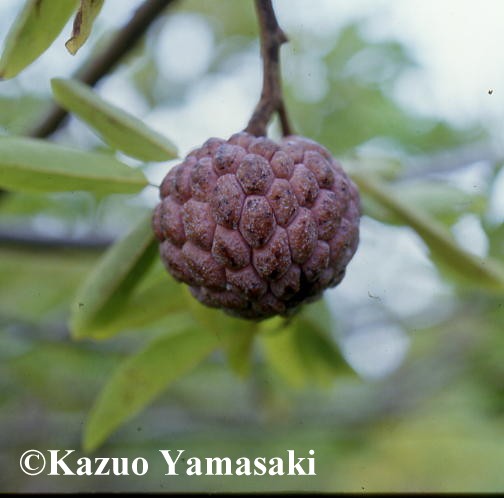
Gandhagataram, seetaaphalam (WOA, 1998).
Common Name: Sugar apple, Custard apple, Anona, Bullock's-heart, Corazon, Nona, Pawpaw
Botanical Name: Annona squamosa L.
Family: Annonaceae
Medicinal Uses
The root shows cathartic, drastic purgative properties and is administered in acute dysentery. It is also employed internally in depression of spirits and spinnal diseases. Bark is known to be a powerful astringent. In Ayurveda, fruits are considered a good tonic; enriches blood, used as expectorant, increases muscular strength; cooling; lessens burning sensation and tendency to biliousness; sedative to heart; relieves vomiting. Ripe fruit is maturant and the mixture along with salt is used against malignant tumours to hasten suppuration. Dried unripe fruit is powdered and mixed with gram-flour to destory vermin (Vohora et al., 1975; Rao et al., 1979; Saluja & Santani, 1984; Atique et al., 1985; Rathore, 1990; Ranjan, 1999). The seeds are said to be abortifacient; produce ulcers in the eye and good to destory lice in hair in Yunani medicine. Seed yield oil and resin which acts as detergent and their powder, mixed with gram-flour, is a good hairwash. Seeds are crushed and used to destroy worms in the wounds of cattle. Seeds are powerful irritant of conjunctiva. Leaves are used as poultice over boils and ulcers and also to kill lice. Leaf infusion is efficacious in prolapsus of children. Bruised leaves with salt make a cataplasm to induce suppuration. They are applied for extraction of guinea-worms.
Veterinary Uses
Leaves of seethaphal (custard apple) are placed in the poultry shelter to prevent lice attack (Merpanaikadu, 2002).
← Back