

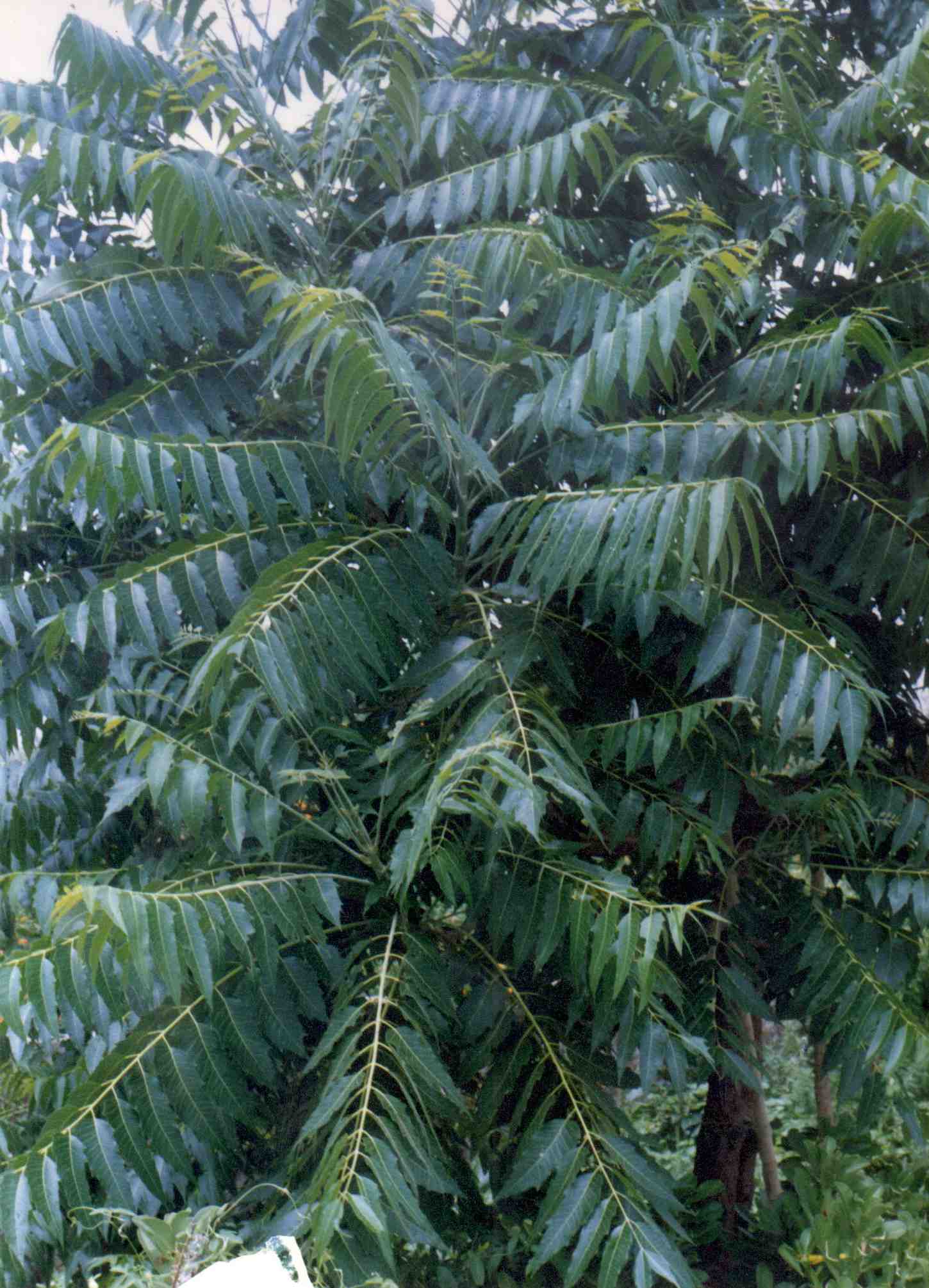
Aralu, Madala (WOA, 1998).
Common Name: Bonduc nut, Physic nut, Fever nut
Botanical Name: Ailanthus excelsa Roxb.
Family: Simaroubaceae
Medicinal Uses
Stem bark shows properties as astringent, antispasmodic, anthelmintic and parasiticidal. It is said to be an active vermifuge, and in powdered form it is narcotic with a strong nauseating odour. It exercises a powerful depressing influence on the nervous system similar to that of tobacco. The fresh bark is considered useful in diarrhoea and dysentery. It has anti-spasmodic and expectorant properties, and is used for asthma, bronchitis and dysentery (Patel & Alex, 1967; Satkopan & Thomas, 1970; Misra & Sharma, 1971; Dennis et al., 1976; Khosa et al., 1985; Dhanasekaran et al., 1993; Suresh et al., 1995; Ogura et al., 1997; Shrimal et al., 2001). The bark is a good substitute for kurchi (Holarrhena antidysenterica Wall.) and is also used in indigenous veterinary practice. Root bark is recommended for heart ailments, epilepsy and asthma. The decoction of leaves is used for washing wounds, swellings and skin eruptions. It is also used to treat malaria.
Veterinary Uses
The stem bark of Ailanthus excelsa is used to cure rope nose wounds in Ox. The stem bark is powdered and mixed in goats milk and administered.
← Back