

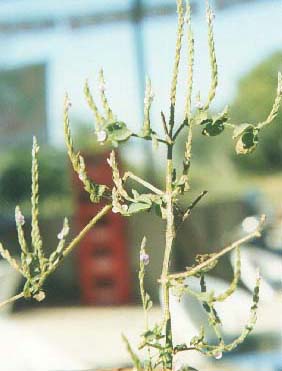
Apamarga
Common Name: Chaff-flower, Prickly chaff-flower, Devil's horsewhip
Botanical Name: Achyranthes aspera L.
Family: Amaranthaceae
Medicinal Uses
The plant is bitter, pungent; heating, laxative, stomachic, carminative, improves appetite and applied in vomitting, bronchitis, "Vata", heart diseases, piles, itching, abdominal pains, ascites, dyspepsia, dysentery, blood diseases (Gambhir et al., 1965; Gupta et al., 1972; Jha, 1977; Ajaishankar et al., 1980; Girach et al.,1992; Bhaumik & Sharma, 1993). An infusion of root is given as a mild astringent in bowel complaints. It is also useful due to pungent laxative properties and is considered useful in dropsy, piles, boils, skin eruption etc. Decoction of the plant is diuretic and is given in renal dropsy, general anasarca and pneumonia. A decoction is made from powdered leaves with honey which is considered useful in early stages of diarrhoea and dysentery. Fresh leaves grounded and mixed with black pepper and garlic and given as anti-periodic. Paste of leaves is applied poisonous insect bites. Seeds are emetic and useful in hydrophobia. Plant ash yields considerable quantity of potash which is used in cases of cough and asthma. It is also used externally in the treatment of ulcers etc. (Ojha & Singh, 1968; Pakrashi et al., 1975; Raman et al., 1996; Kumar et al., 1998; Ranjan, 1999). An Ayurvedic preparation Apamarga Taila is made from ash and sesame oil, used in earache. In indigenous medicine, it is reported to be pungent, astrigent, pectoral and diuretic. It is used as an emmenagogue. It is given in piles, boils and skin eruptions (Gupta et al., 1997). A decoction of the plant is useful in pneumonia and renal dropsy. The juice of the plant is used in ophthalmia and dysentery. The paste of plant is made with fruits of Piper longum in water is said to be good remedy against bite of mad dog. An alkaloid (Achyranthine) extracted which is reported to dilate the blood vessels, lower the blood- pressure, depress the heart, and increase the rate and amplitude of respiration. The plant is considered useful for eye and liver complaints, rheumatism, scabies and other skin diseases. For the treatment of menorrhagia, flowers ground and mixed with curd and sugar and given to the patient. The flower-tops are employed for the treatment of rabies. Powdered seeds are soaked in butter-milk and given as a remedy for biliousness. The seeds are also considered emetic.
Veterinary Uses
It is used in to expel placenta in animals. A compound drug is made using the plant which is considered efficaceous in the clinical recovery from paracetamol induced hepatopathy in goats.
← Back